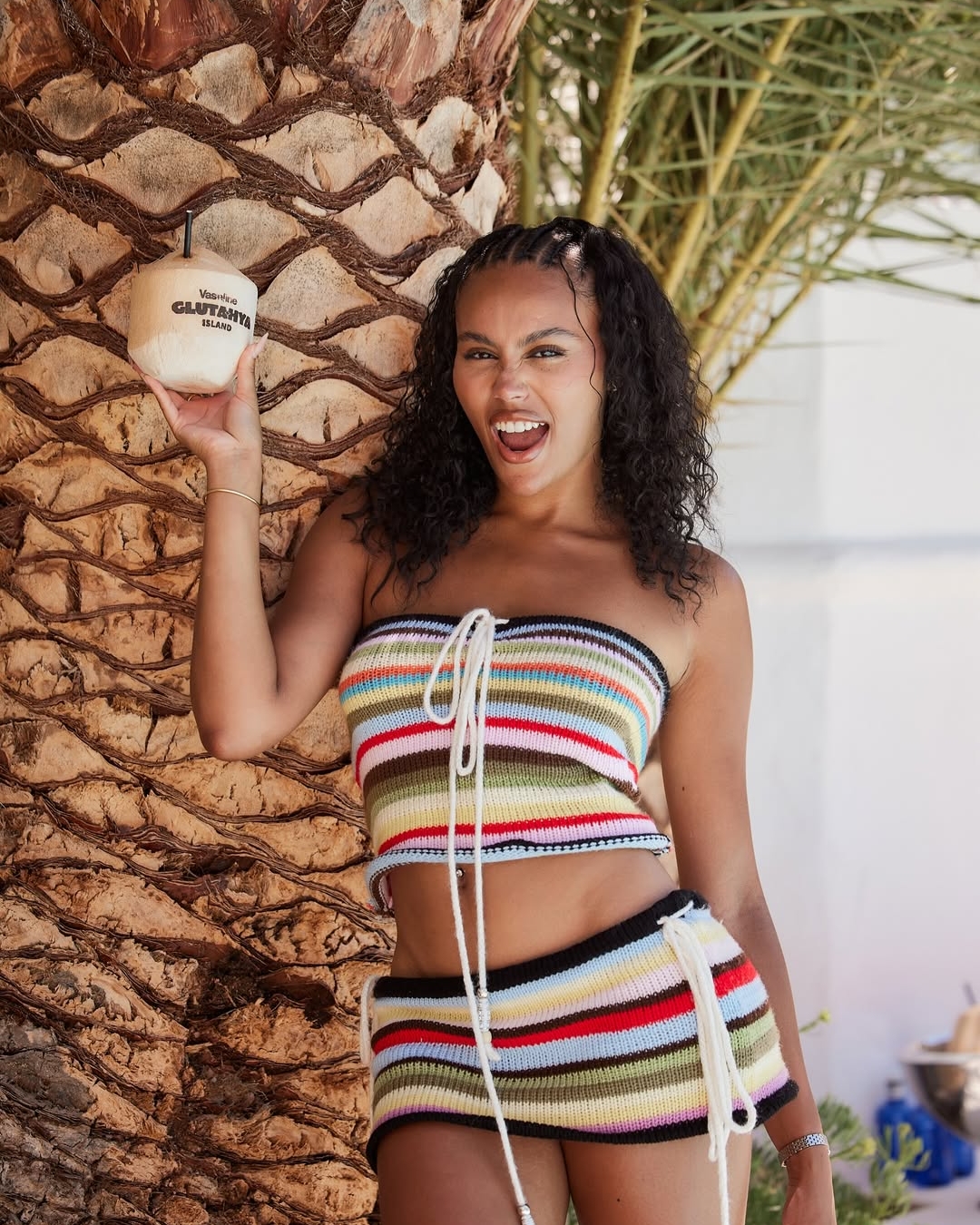
Earle is 25. She has been posting on TikTok since 2022. And she has just signed with the world's most powerful streaming platform to bring an unscripted series about her life to a global audience. At some point in the last three years, the creator-to-mainstream pipeline stopped being a novelty and became a strategy.
The series itself – produced by Fulwell Entertainment and DGN Studios, with Ben Winston among the executive producers – is described as an unscripted behind-the-scenes look at Earle's life: her blended family, her friendships, her business, the particular chaos of being a young woman in transition while also being extremely famous online. Filming reportedly began in August 2025. Beyond that, details remain thin. But the details aren't really the point. The point is the architecture of the deal and what it signals about where the creator economy is going.

The stack
The most useful way to understand Alix Earle's commercial career is as a deliberate stack of three different kinds of moves, each serving a different purpose. There are the credibility-forward ambassador roles, designed to reinforce authenticity and give her persona a beauty-industry foundation. There are the classic paid campaigns, which monetise attention in the most straightforward sense. And then there are the equity positions – the ownership stakes that convert influence into something that sits on a balance sheet long after a single post has been scrolled past.
In the first category: her 2024 role as the first global face of Hero Cosmetics, centred on their Mighty Patch and framed around acne, a category she'd discussed openly on her platform long before any brand deal existed. The partnership worked precisely because it didn't look like one. In the second: Carl's Jr., Pantene, K18, and the kind of Super Bowl-adjacent campaign work that signals she can move products at mass scale, not just influence a niche.

In the third (and this is the interesting part) Poppi, SipMARGS, and Gorgie. Earle invested in Poppi in 2024 through an arrangement involving annual contract work in exchange for equity and revenue share mechanics. In March 2025, PepsiCo acquired Poppi for $1.95 billion. The exact size of Earle's stake and her payout were not disclosed, but the structure itself speaks clearly enough: she wasn't just the face of a brand; she was on its cap table. When SipMARGS relaunched in March 2025 with $3 million in backing, she came in as investor and brand partner. When Gorgie announced her as a strategic investor in December 2025, the press release described it explicitly as a transition "from advocacy to ownership."
This shift from campaign economics to cap table economics is one of the defining moves of this generation of creators, and Earle is among the clearest examples of it being executed deliberately rather than opportunistically. The Netflix deal is not separate from this strategy but rather it is the latest expression of it. Legacy media gives you something the algorithm cannot: global distribution that isn't subject to a platform's next update, cultural legitimacy that travels beyond your existing audience, and the kind of durable IP value that can be packaged, licenced, and revisited long after the moment has passed.
The mainstream turn is bigger than Alix Earle
What's happening to Earle is part of a broader restructuring of how the most commercially significant creators are thinking about their careers — and how media companies are thinking about creators. The two are meeting in the middle, and 2024–2026 is arguably when that meeting became institutional rather than experimental.
MrBeast's Beast Games on Prime Video is the most extreme version of this: a competition format with 1,000 contestants, a $5 million prize, production costs that reportedly exceeded $100 million, and a two-season renewal before the first season had finished airing. MrBeast, for his part, described losing "tens of millions" on the season in pursuit of the right optics for "YouTube creators on streaming." That framing is instructive. He understands that the point of the exercise is not this season's margin; it is permissioning everything else: the consumer brands, the fundraising, the expansion of Beast Industries into something that looks less like a creator and more like a conglomerate.

Logan Paul has built a different version of the same logic: a reality show (Paul American, on Max), a WWE contract that gives him recurring physical-world presence, a Prime hydration brand with centre-ring mat branding at premium live events, and a podcast now integrated into the WWE and Fanatics network. Each element reinforces the others. None of them works as well in isolation as they do together.
Emma Chamberlain is doing something different again and arguably more interesting from a brand architecture perspective. Rather than fronting a reality format about her life, she's taken a cast role in Forbidden Fruits, a feature film acquired by IFC Films and Shudder for a theatrical release in 2026. The Cartier ambassadorship is already in place, giving her a luxury credential that most creators her age haven't built. She is constructing something that looks less like a creator career and more like a traditional actor's trajectory, with an online platform as the launchpad rather than the ceiling.
The agency layer
None of this is happening accidentally. One of the quieter but more significant structural changes of the last two years is the formalisation of creator representation at the major talent agencies. The "all areas" language appearing in agency announcements, WME, CAA, UTA, is important: it signals that these signings aren't just about packaging the occasional branded post or TV audition. They are about setting creators up for multi-format monetisation across podcasts, book deals, live tours, television development, and equity-based commercial structures. The Netflix deal for Alix Earle was brokered by UTA. The deal structure – equity positions, platform-level commissions, ongoing brand partnerships – requires the kind of complex commercial negotiation that a manager working alone can't optimally handle.
The emergence of cross-Atlantic representation is worth noting too. UK and US agency infrastructure is increasingly working together on creators whose audience is genuinely global, which opens a question worth asking: which British creators are building the kind of platform that merits this kind of career architecture, and who is helping them do it?
What it means for brands
The strategic implication for anyone working in brand or marketing is this: the creator-as-face model is being supplemented (and in some cases replaced) by the creator-as-co-owner model. When Alix Earle invested in Poppi, she was not just giving the brand her reach; she was aligning her incentives with its success. The content she created about Poppi was not content she was paid to create in the traditional sense, it was content she had a financial reason to believe in. That is a fundamentally different relationship, and audiences can feel the difference even when they cannot articulate it.
For smaller brands, the lesson is not "give equity to every creator you work with". That is neither practical nor necessarily desirable. The lesson is about authenticity of alignment. The partnerships that generate real commercial traction are the ones where the creator's involvement makes intuitive sense, where the product is something they would plausibly use, and where the structure of the relationship gives them a reason to show up consistently rather than once. Rhode understood this from the beginning. So did Poppi, clearly, given where it ended up.
The other implication is about longevity. Social platforms are volatile. Algorithms change, formats date, audiences move. What Earle is building, and what the smartest creators of her generation are building, is a portfolio of assets that does not depend entirely on any single platform's goodwill. The Netflix series is one layer of that. The equity positions are another. The talent agency relationships are a third. Each one is a hedge against the precariousness of living entirely inside the feed.


.svg)


.svg)
.svg)