Case Studies

The Cool-Girl Bandage Taking Over Your Feed

By
The Desiree Team
June 10, 2026
Benji
Benjie launched a bandage brand at Coachella with bathroom flyers and recycled Amazon boxes, and out-marketed every six-figure brand trip in your feed. Personality, it turns out, is the whole strategy.

The first thing a lot of people saw of Benjie was a piece of paper taped inside a festival toilet. It read STOP RAWDOGGING YOUR SHOES, and stapled along the bottom were tear-off strips that each held a real bandage you could pocket on your way out. Anyone limping into a Coachella bathroom by day two was, by definition, the customer, and founders Tessa Cohen-Sokolski and Sara Sebastjanska had reasoned that a person nursing blisters in a portaloo wants a bandage far more than a stranger in an open field wants to hear about one. The flyers did the work the founders couldn't do in person, which meant the two of them could be everywhere at once without actually being anywhere.

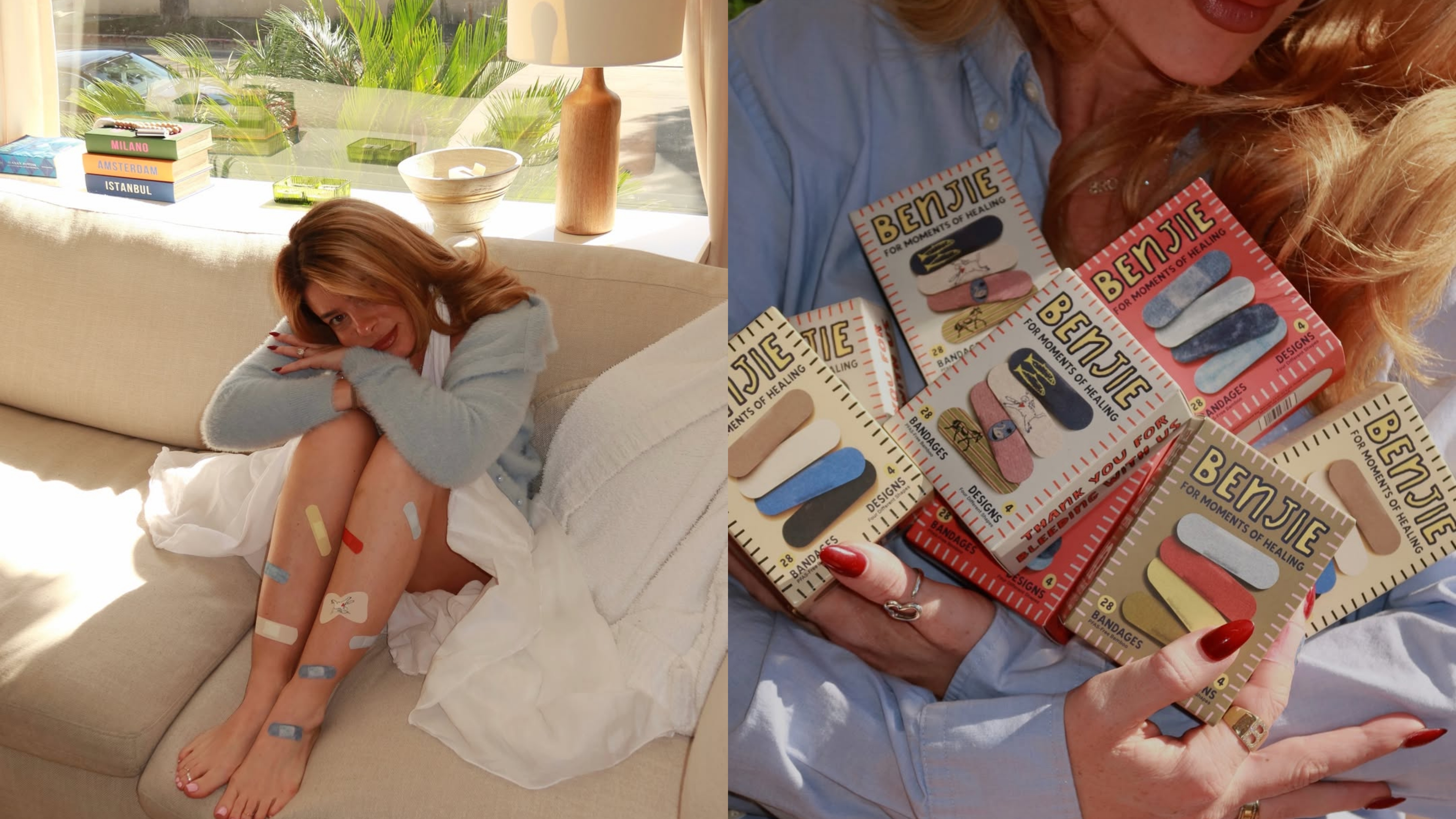
That instinct, for getting in front of people at the exact moment a product solves something they're already feeling, sits underneath everything Benjie has done since. The brand sells PFAS-free bamboo bandages that are biodegradable, latex-free and, more to the point, designed to be looked at, sold in themed sets like The Lovely Bunch and The Denim Edit under the tagline "for moments of healing." Both founders came from marketing, so the launch was never going to be a case of showing up with product and hoping for the best. What they built instead was a launch engineered for visibility on two fronts at once, and the gap between those two fronts is where the strategy lives.
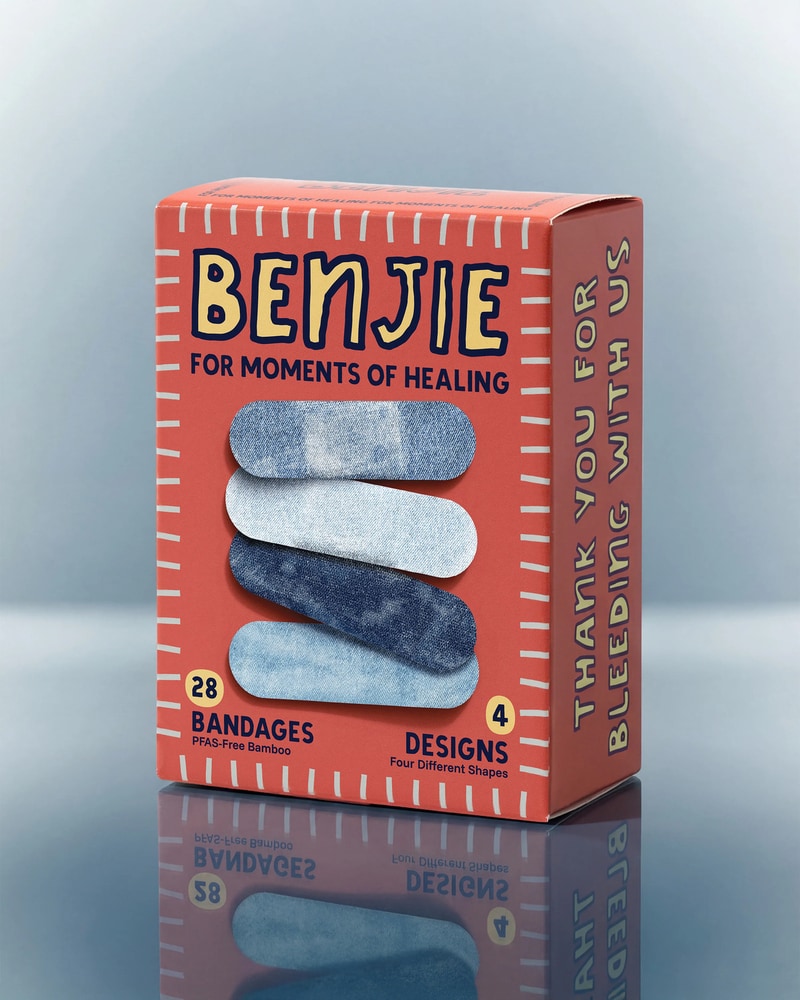
Clean the Sky - PFAS-Free Bamboo Bandages

Spending attention instead of budget

We've spent a good deal of time in these pages on the brand trip, the polished, high-gloss activation where a beauty brand flies a cohort of creators somewhere photogenic and lets the content take care of itself. It has become the default growth move for the category, and like all defaults it has started to look the same in everyone's feed. Benjie did close to the opposite, on a budget that wouldn't cover the catering on one of those trips.

There was no destination and no guest list. There were tear-off sheets in bathrooms, custom decks of playing cards with a bandage paper-clipped to each one so the founders had something useful to hand an influencer instead of a pitch, and a steady stream of content documenting all of it as it happened. They handed those decks to the likes of Leah Kateb, Jesse Solomon and Trevor Wallace, and when Wallace mistook a bandage for a microdosing patch, Benjie folded the mix-up straight back into its own feed rather than correcting the record. The launch video that started the whole thing opened on a confession about being too clumsy to function and worked its way round to chemicals and bamboo only once viewers were already invested in the two people doing the talking.

The numbers came fast, close to a million views in under a week, helped by the founders' decision to time that video so it landed in the same stretch as the Coachella footage instead of standing on its own. In a feed crowded with activations that announce their own expense, the sight of two people doing last-minute Staples runs and hand-delivering boxes read as a kind of relief. Attention, it turned out, was available to the most visible hustle rather than the largest cheque.
A product that does its own distribution

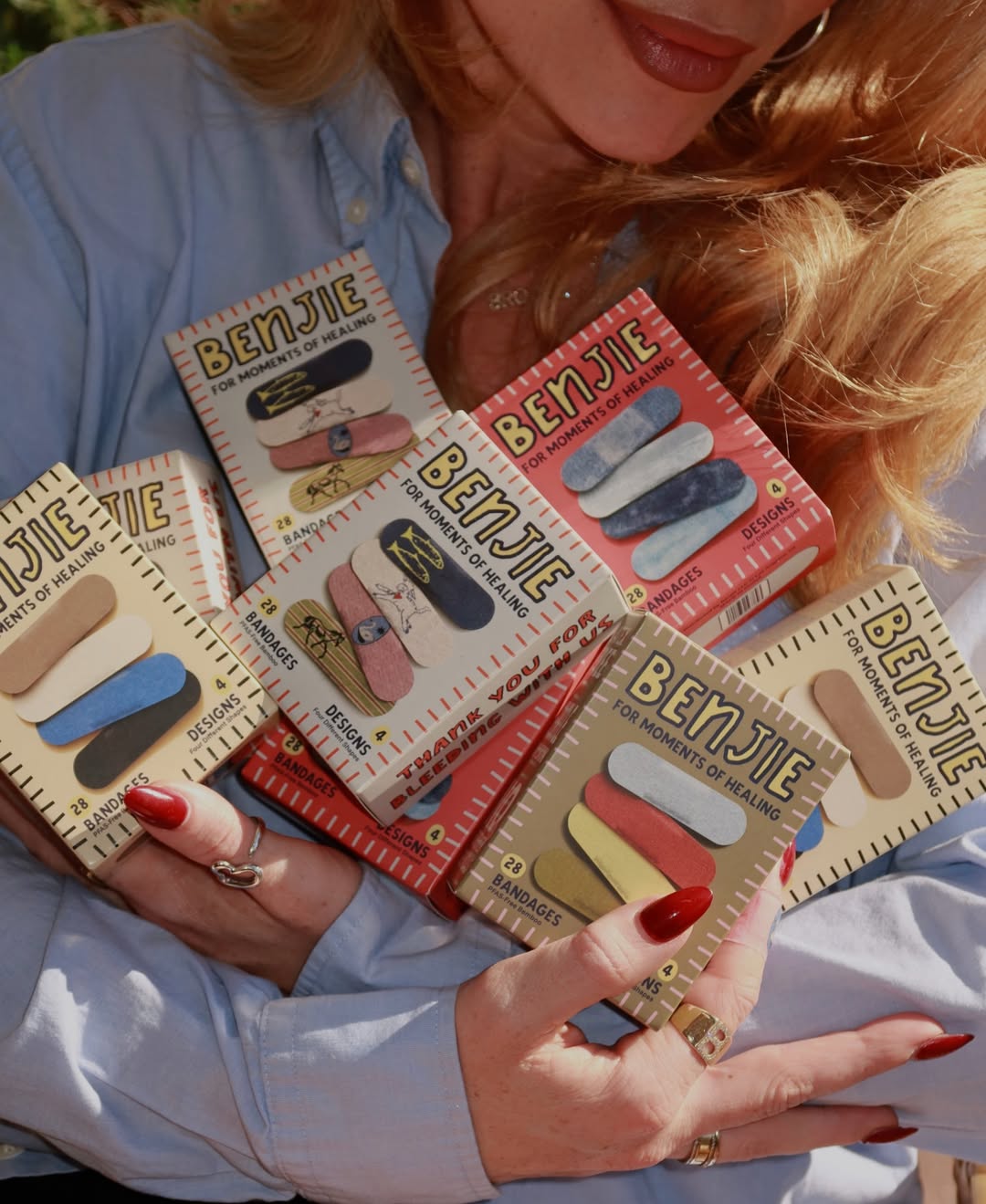
The second front is the product itself. A Benjie bandage is built to be seen on the body, which quietly turns every customer into a small piece of distribution, the same trick Starface pulled with the pimple patch when it decided a blemish could be a styling opportunity rather than something to hide. Once a category accepts that its product can be worn and not merely used, the whole logic of the thing changes. Self-expression does the advertising, repeat purchase stops depending on injury, and the door opens onto seasonal sets and limited drops in a category that has historically sold one beige box per decade.

This is also where the brand's voice earns its keep. The cookie consent button on the website reads "track me daddy," the ad copy informs you that your feet are crying, and the packaging thanks you for bleeding with it, all of it fluent in a register a heritage first-aid brand could never sign off on. That is the part incumbents struggle to answer. Johnson & Johnson has the budget to outspend Benjie a thousand times over, but it also has brand guidelines and a legal department, and neither of those will ever approve "track me daddy." In a category where the products are functionally near-identical, personality is the one position a giant cannot simply buy its way into.

The unglamorous middle

What makes the case worth telling, instead of just admiring, is how much of the scrappiness was real constraint dressed up as charm. The hand-painted PR boxes, made from recycled Amazon packaging and customised per recipient down to the inside jokes, were a deliberate answer to a PR-box format the founders found both wasteful and oversaturated, and they are also gorgeous and completely unscalable; the most elaborate one, built for Bethenny Frankel, took four days, earned a public comment, and then stalled because they never got her shipping address.

The mess ran deeper than packaging. Before any of the Coachella footage existed, the founders spent something like forty thousand dollars and, by their own count, fourteen emotional breakdowns on a run of talented designers who never quite understood what they were building, paying invoice after invoice on the hope that the next round would finally click. The lesson they took from it, hire slow and fire fast, is one most studios and founders reading this have paid for at least once, and the more useful version of it is what they learned to do afterwards: push back early, slow the payments when the work drifts, and say plainly when someone is the wrong fit before the relationship has cost you a quarter.

Then the launch worked, which created its own problem. The Lovely Bunch sold out in a day and The Denim Edit in five, while the bulk of the inventory was still literally on a boat, forcing an expensive scramble to airship stock and unpick a logistics plan they'd only just set. A custom order insert came back from the printer upside down, and the preorders went out two days late. None of it was catastrophic, and all of it is the texture the highlight reel leaves out, the reminder that selling out stops feeling like a victory at roughly the same moment you start refreshing inventory counts every twenty minutes.

What it proves

The temptation with a brand like Benjie is to file it under good fun and move on, but the strategic reading is more demanding than that. The eco credentials, the bamboo and the absence of forever chemicals, barely feature in the marketing, because in 2026 sustainability has slid from a selling point to a baseline expectation, and the founders were smart enough to lead with desire and let virtue ride in the back seat. The budget was never the moat either. What carried Benjie was visibility, engineered into the launch through visible effort and into the product through visible design, in a market where attention is the genuinely scarce resource and a better ingredient list has never once gone viral.

Whether that holds is the open question, and it's the one worth watching. Personality-led virality is cheap to start and expensive to sustain, the restocks are still chasing the demand, and a PR operation that takes four days a box does not survive a brand's second year in its current form. The founders will eventually have to work out which parts of the scrappiness were strategy and which were simply the conditions of being new, then keep the first and quietly retire the second. For now, Benjie has proved the thing that's hardest to prove in a commoditised category and easiest to underrate: that the most defensible asset a brand can build is a reason to be looked at.
SUBSCRIBE

The ultimate guide for the modern brand owner, delivered straight to your inbox.
Thank you for subscribing!
Oops! Something went wrong while submitting the form.
Share button
linkedinpinterestmail
Case Studies

The Cool-Girl Bandage Taking Over Your Feed

Benjie launched a bandage brand at Coachella with bathroom flyers and recycled Amazon boxes, and out-marketed every six-figure brand trip in your feed. Personality, it turns out, is the whole strategy.

By
The Desiree Team
June 10, 2026
Benji

The first thing a lot of people saw of Benjie was a piece of paper taped inside a festival toilet. It read STOP RAWDOGGING YOUR SHOES, and stapled along the bottom were tear-off strips that each held a real bandage you could pocket on your way out. Anyone limping into a Coachella bathroom by day two was, by definition, the customer, and founders Tessa Cohen-Sokolski and Sara Sebastjanska had reasoned that a person nursing blisters in a portaloo wants a bandage far more than a stranger in an open field wants to hear about one. The flyers did the work the founders couldn't do in person, which meant the two of them could be everywhere at once without actually being anywhere.

That instinct, for getting in front of people at the exact moment a product solves something they're already feeling, sits underneath everything Benjie has done since. The brand sells PFAS-free bamboo bandages that are biodegradable, latex-free and, more to the point, designed to be looked at, sold in themed sets like The Lovely Bunch and The Denim Edit under the tagline "for moments of healing." Both founders came from marketing, so the launch was never going to be a case of showing up with product and hoping for the best. What they built instead was a launch engineered for visibility on two fronts at once, and the gap between those two fronts is where the strategy lives.

Clean the Sky - PFAS-Free Bamboo Bandages

Spending attention instead of budget

We've spent a good deal of time in these pages on the brand trip, the polished, high-gloss activation where a beauty brand flies a cohort of creators somewhere photogenic and lets the content take care of itself. It has become the default growth move for the category, and like all defaults it has started to look the same in everyone's feed. Benjie did close to the opposite, on a budget that wouldn't cover the catering on one of those trips.

There was no destination and no guest list. There were tear-off sheets in bathrooms, custom decks of playing cards with a bandage paper-clipped to each one so the founders had something useful to hand an influencer instead of a pitch, and a steady stream of content documenting all of it as it happened. They handed those decks to the likes of Leah Kateb, Jesse Solomon and Trevor Wallace, and when Wallace mistook a bandage for a microdosing patch, Benjie folded the mix-up straight back into its own feed rather than correcting the record. The launch video that started the whole thing opened on a confession about being too clumsy to function and worked its way round to chemicals and bamboo only once viewers were already invested in the two people doing the talking.

The numbers came fast, close to a million views in under a week, helped by the founders' decision to time that video so it landed in the same stretch as the Coachella footage instead of standing on its own. In a feed crowded with activations that announce their own expense, the sight of two people doing last-minute Staples runs and hand-delivering boxes read as a kind of relief. Attention, it turned out, was available to the most visible hustle rather than the largest cheque.

A product that does its own distribution

The second front is the product itself. A Benjie bandage is built to be seen on the body, which quietly turns every customer into a small piece of distribution, the same trick Starface pulled with the pimple patch when it decided a blemish could be a styling opportunity rather than something to hide. Once a category accepts that its product can be worn and not merely used, the whole logic of the thing changes. Self-expression does the advertising, repeat purchase stops depending on injury, and the door opens onto seasonal sets and limited drops in a category that has historically sold one beige box per decade.

This is also where the brand's voice earns its keep. The cookie consent button on the website reads "track me daddy," the ad copy informs you that your feet are crying, and the packaging thanks you for bleeding with it, all of it fluent in a register a heritage first-aid brand could never sign off on. That is the part incumbents struggle to answer. Johnson & Johnson has the budget to outspend Benjie a thousand times over, but it also has brand guidelines and a legal department, and neither of those will ever approve "track me daddy." In a category where the products are functionally near-identical, personality is the one position a giant cannot simply buy its way into.

The unglamorous middle

What makes the case worth telling, instead of just admiring, is how much of the scrappiness was real constraint dressed up as charm. The hand-painted PR boxes, made from recycled Amazon packaging and customised per recipient down to the inside jokes, were a deliberate answer to a PR-box format the founders found both wasteful and oversaturated, and they are also gorgeous and completely unscalable; the most elaborate one, built for Bethenny Frankel, took four days, earned a public comment, and then stalled because they never got her shipping address.

The mess ran deeper than packaging. Before any of the Coachella footage existed, the founders spent something like forty thousand dollars and, by their own count, fourteen emotional breakdowns on a run of talented designers who never quite understood what they were building, paying invoice after invoice on the hope that the next round would finally click. The lesson they took from it, hire slow and fire fast, is one most studios and founders reading this have paid for at least once, and the more useful version of it is what they learned to do afterwards: push back early, slow the payments when the work drifts, and say plainly when someone is the wrong fit before the relationship has cost you a quarter.

Then the launch worked, which created its own problem. The Lovely Bunch sold out in a day and The Denim Edit in five, while the bulk of the inventory was still literally on a boat, forcing an expensive scramble to airship stock and unpick a logistics plan they'd only just set. A custom order insert came back from the printer upside down, and the preorders went out two days late. None of it was catastrophic, and all of it is the texture the highlight reel leaves out, the reminder that selling out stops feeling like a victory at roughly the same moment you start refreshing inventory counts every twenty minutes.

What it proves

The temptation with a brand like Benjie is to file it under good fun and move on, but the strategic reading is more demanding than that. The eco credentials, the bamboo and the absence of forever chemicals, barely feature in the marketing, because in 2026 sustainability has slid from a selling point to a baseline expectation, and the founders were smart enough to lead with desire and let virtue ride in the back seat. The budget was never the moat either. What carried Benjie was visibility, engineered into the launch through visible effort and into the product through visible design, in a market where attention is the genuinely scarce resource and a better ingredient list has never once gone viral.

Whether that holds is the open question, and it's the one worth watching. Personality-led virality is cheap to start and expensive to sustain, the restocks are still chasing the demand, and a PR operation that takes four days a box does not survive a brand's second year in its current form. The founders will eventually have to work out which parts of the scrappiness were strategy and which were simply the conditions of being new, then keep the first and quietly retire the second. For now, Benjie has proved the thing that's hardest to prove in a commoditised category and easiest to underrate: that the most defensible asset a brand can build is a reason to be looked at.

Share button
linkedinpinterestmail
Case Studies

The Cool-Girl Bandage Taking Over Your Feed

Benjie launched a bandage brand at Coachella with bathroom flyers and recycled Amazon boxes, and out-marketed every six-figure brand trip in your feed. Personality, it turns out, is the whole strategy.

By
The Desiree Team
June 10, 2026
Benji

The first thing a lot of people saw of Benjie was a piece of paper taped inside a festival toilet. It read STOP RAWDOGGING YOUR SHOES, and stapled along the bottom were tear-off strips that each held a real bandage you could pocket on your way out. Anyone limping into a Coachella bathroom by day two was, by definition, the customer, and founders Tessa Cohen-Sokolski and Sara Sebastjanska had reasoned that a person nursing blisters in a portaloo wants a bandage far more than a stranger in an open field wants to hear about one. The flyers did the work the founders couldn't do in person, which meant the two of them could be everywhere at once without actually being anywhere.

That instinct, for getting in front of people at the exact moment a product solves something they're already feeling, sits underneath everything Benjie has done since. The brand sells PFAS-free bamboo bandages that are biodegradable, latex-free and, more to the point, designed to be looked at, sold in themed sets like The Lovely Bunch and The Denim Edit under the tagline "for moments of healing." Both founders came from marketing, so the launch was never going to be a case of showing up with product and hoping for the best. What they built instead was a launch engineered for visibility on two fronts at once, and the gap between those two fronts is where the strategy lives.

Clean the Sky - PFAS-Free Bamboo Bandages

Spending attention instead of budget

We've spent a good deal of time in these pages on the brand trip, the polished, high-gloss activation where a beauty brand flies a cohort of creators somewhere photogenic and lets the content take care of itself. It has become the default growth move for the category, and like all defaults it has started to look the same in everyone's feed. Benjie did close to the opposite, on a budget that wouldn't cover the catering on one of those trips.

There was no destination and no guest list. There were tear-off sheets in bathrooms, custom decks of playing cards with a bandage paper-clipped to each one so the founders had something useful to hand an influencer instead of a pitch, and a steady stream of content documenting all of it as it happened. They handed those decks to the likes of Leah Kateb, Jesse Solomon and Trevor Wallace, and when Wallace mistook a bandage for a microdosing patch, Benjie folded the mix-up straight back into its own feed rather than correcting the record. The launch video that started the whole thing opened on a confession about being too clumsy to function and worked its way round to chemicals and bamboo only once viewers were already invested in the two people doing the talking.

The numbers came fast, close to a million views in under a week, helped by the founders' decision to time that video so it landed in the same stretch as the Coachella footage instead of standing on its own. In a feed crowded with activations that announce their own expense, the sight of two people doing last-minute Staples runs and hand-delivering boxes read as a kind of relief. Attention, it turned out, was available to the most visible hustle rather than the largest cheque.

A product that does its own distribution

The second front is the product itself. A Benjie bandage is built to be seen on the body, which quietly turns every customer into a small piece of distribution, the same trick Starface pulled with the pimple patch when it decided a blemish could be a styling opportunity rather than something to hide. Once a category accepts that its product can be worn and not merely used, the whole logic of the thing changes. Self-expression does the advertising, repeat purchase stops depending on injury, and the door opens onto seasonal sets and limited drops in a category that has historically sold one beige box per decade.

This is also where the brand's voice earns its keep. The cookie consent button on the website reads "track me daddy," the ad copy informs you that your feet are crying, and the packaging thanks you for bleeding with it, all of it fluent in a register a heritage first-aid brand could never sign off on. That is the part incumbents struggle to answer. Johnson & Johnson has the budget to outspend Benjie a thousand times over, but it also has brand guidelines and a legal department, and neither of those will ever approve "track me daddy." In a category where the products are functionally near-identical, personality is the one position a giant cannot simply buy its way into.

The unglamorous middle

What makes the case worth telling, instead of just admiring, is how much of the scrappiness was real constraint dressed up as charm. The hand-painted PR boxes, made from recycled Amazon packaging and customised per recipient down to the inside jokes, were a deliberate answer to a PR-box format the founders found both wasteful and oversaturated, and they are also gorgeous and completely unscalable; the most elaborate one, built for Bethenny Frankel, took four days, earned a public comment, and then stalled because they never got her shipping address.

The mess ran deeper than packaging. Before any of the Coachella footage existed, the founders spent something like forty thousand dollars and, by their own count, fourteen emotional breakdowns on a run of talented designers who never quite understood what they were building, paying invoice after invoice on the hope that the next round would finally click. The lesson they took from it, hire slow and fire fast, is one most studios and founders reading this have paid for at least once, and the more useful version of it is what they learned to do afterwards: push back early, slow the payments when the work drifts, and say plainly when someone is the wrong fit before the relationship has cost you a quarter.

Then the launch worked, which created its own problem. The Lovely Bunch sold out in a day and The Denim Edit in five, while the bulk of the inventory was still literally on a boat, forcing an expensive scramble to airship stock and unpick a logistics plan they'd only just set. A custom order insert came back from the printer upside down, and the preorders went out two days late. None of it was catastrophic, and all of it is the texture the highlight reel leaves out, the reminder that selling out stops feeling like a victory at roughly the same moment you start refreshing inventory counts every twenty minutes.

What it proves

The temptation with a brand like Benjie is to file it under good fun and move on, but the strategic reading is more demanding than that. The eco credentials, the bamboo and the absence of forever chemicals, barely feature in the marketing, because in 2026 sustainability has slid from a selling point to a baseline expectation, and the founders were smart enough to lead with desire and let virtue ride in the back seat. The budget was never the moat either. What carried Benjie was visibility, engineered into the launch through visible effort and into the product through visible design, in a market where attention is the genuinely scarce resource and a better ingredient list has never once gone viral.

Whether that holds is the open question, and it's the one worth watching. Personality-led virality is cheap to start and expensive to sustain, the restocks are still chasing the demand, and a PR operation that takes four days a box does not survive a brand's second year in its current form. The founders will eventually have to work out which parts of the scrappiness were strategy and which were simply the conditions of being new, then keep the first and quietly retire the second. For now, Benjie has proved the thing that's hardest to prove in a commoditised category and easiest to underrate: that the most defensible asset a brand can build is a reason to be looked at.

Share button
linkedinpinterestmail
Case Studies

The Cool-Girl Bandage Taking Over Your Feed

By
The Desiree Team
June 10, 2026
Benji
Benjie launched a bandage brand at Coachella with bathroom flyers and recycled Amazon boxes, and out-marketed every six-figure brand trip in your feed. Personality, it turns out, is the whole strategy.

While the brands mentioned are not sponsored or paid advertisements, some of the products highlighted may earn us a commission.

Sign up for our newsletter to receive the latest brand news and insights from Brand Insider.

Share button
linkedinpinterestmail