Marketing

30 Stars, 5,000 Stores and One Very Expensive Question: Can Nike Buy Its Swagger Back?

By
The Desiree Team
June 3, 2026
A six-minute film, thirty-odd A-listers and a self-styled "football universe": Nike's World Cup campaign is a very expensive bet that spectacle can still buy a brand back into love. Whether it works is the tournament's most interesting question, and no, the cameos aren't the answer.

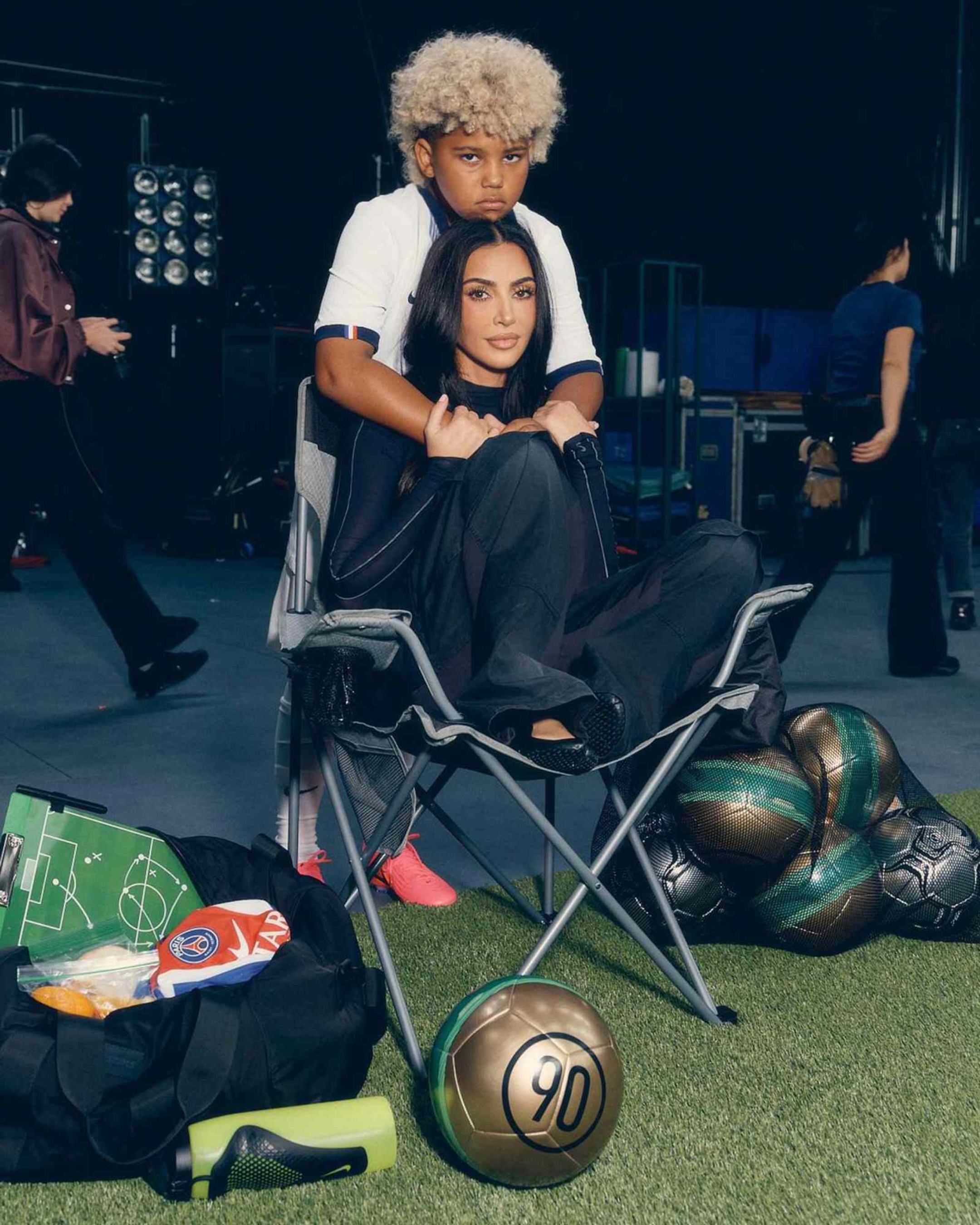
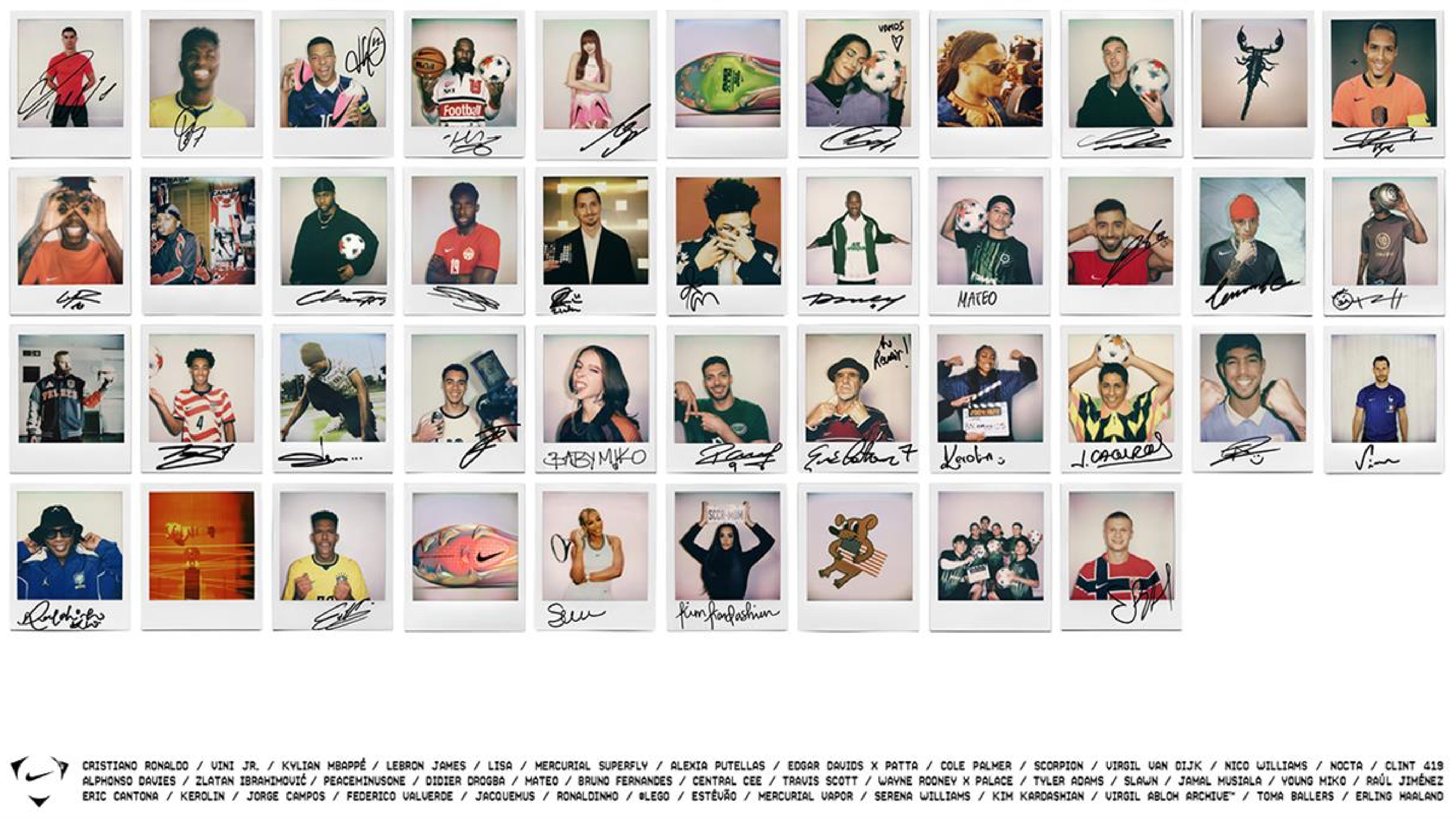
Two weeks before the rest of the marketing world had finished clearing its throat, Nike walked into the 2026 World Cup with a six-minute film set inside a Hollywood mega-studio and proceeded to empty the entire green room onto the screen. Rip the Script, made with longtime agency Wieden+Kennedy, gathers more than thirty names that have no business being in the same frame, with Mbappé, Vini Jr., Haaland and Ronaldo sharing space with Ronaldinho and Zlatan before the whole thing widens out to take in Kim Kardashian, Travis Scott, LeBron James and Lisa of Blackpink, and the effect is closer to a studio tentpole than a boot advert. That comparison is deliberate. Nike's own people have talked about building a football universe in the mould of Marvel or DC, an expandable world it can keep returning to long after the final whistle, so the film is the first instalment rather than the whole story.

‍

‍

The pitch beneath the spectacle is simple and quite charming, which is that the game is at its best when players trust their instincts instead of the playbook, and the film is a rallying cry for the joyful, improvised version of football over the over-coached one. It is also, read a little less generously, a brand telling itself the same thing. Nike has spent the last eighteen months in a genuinely difficult patch, its shares touching an eight-year low this spring while chief executive Elliott Hill, back from retirement to run a turnaround he calls Win Now, has conceded that recovery is taking longer than he would like. The campaign has been positioned internally as an entry point to the brand's future, an invitation extended pointedly to diehards and naysayers alike, which is the language of a company that knows it has ground to win back rather than simply hold.

So the interesting question is not whether the film is good, because it plainly is, and it will gather the impressions to prove it. The question is whether spectacle of this density still converts into the thing Nike actually needs, which is affection rather than awareness, and the sales that tend to follow from it. Star wattage has quietly become the cheapest thing in marketing, since anyone with a budget can rent a famous face, and at a World Cup every brand does exactly that. Lay's has put Will Ferrell on a branded bus to recruit casual fans, Coca-Cola is running a sweeping global emotion campaign, and the prediction market Kalshi handed three films to Timothée Chalamet, all of them fishing in the same celebrity-saturated water. When everyone can buy fame, fame stops being a differentiator, and a cast of thirty starts to risk reading as noise rather than authority.

Which is why the part of Nike's effort that registers least on first watch is the part worth studying. Underneath the film sits an architecture that the cameos are really there to advertise: a refresh of more than five thousand retail locations, physical houses landing in New York, Los Angeles and Dallas for the duration of the tournament, and Toma el Juego, a community football programme that has already run more than a hundred small-sided tournaments across six continents. That is the actual bet. The famous faces buy the attention, and the stores, the city takeovers and the grassroots tournaments are the attempt to turn that attention into something that happens on the ground, in a real place, with the brand's name on it. Nike has wagered the whole campaign on the belief that sport is the last genuine monoculture and one of the few arenas still meaningfully gatekept by talent, and the strategy only pays off if it can convert mass spectacle back into local, lived experience.

The contrast with Adidas sharpens all of it. Adidas has been the tournament's marquee sponsor since the 1970s and still supplies the official match ball, and it has reached for this World Cup the way an old house reaches for its archive, leading with a cinematic Messi build-up film and a Beckham-and-Zidane "time to choose" spot for its Predator boots. Adidas is selling continuity and earned authority, the quiet confidence of a brand that never had to explain why it belongs in the room. Nike is doing the more expensive thing, spending vast creative energy to reassert a relevance it briefly mislaid, and the two approaches amount to a clean natural experiment in how a brand claims cultural ground, which is to say you can inherit it quietly or seize it loudly, and we are about to watch both strategies run at once.

For anyone building a brand at any scale, the lesson here has nothing to do with budget, because almost none of us has Nike's. It is that the durable asset is never the cast list. It is the world a brand is willing to build and maintain around a cultural moment, the narrative it can extend, the community it can convene and the place it can put its name on, and the famous faces are only ever the doorway in. Nike understands this better than almost anyone, which is exactly why it has wrapped a six-minute celebrity reel around five thousand shops and a hundred street tournaments. Whether the swagger actually returns will not be decided by impression counts in the opening fortnight. It will be decided over the next month, on the older and harder question of whether a brand can buy its way back into the culture's affection, or whether affection, once it cools, has to be earned again slowly, one match and one rabona at a time.
SUBSCRIBE

The ultimate guide for the modern brand owner, delivered straight to your inbox.
Thank you for subscribing!
Oops! Something went wrong while submitting the form.
Share button
linkedinpinterestmail
Marketing

30 Stars, 5,000 Stores and One Very Expensive Question: Can Nike Buy Its Swagger Back?

A six-minute film, thirty-odd A-listers and a self-styled "football universe": Nike's World Cup campaign is a very expensive bet that spectacle can still buy a brand back into love. Whether it works is the tournament's most interesting question, and no, the cameos aren't the answer.

By
The Desiree Team
June 3, 2026

Two weeks before the rest of the marketing world had finished clearing its throat, Nike walked into the 2026 World Cup with a six-minute film set inside a Hollywood mega-studio and proceeded to empty the entire green room onto the screen. Rip the Script, made with longtime agency Wieden+Kennedy, gathers more than thirty names that have no business being in the same frame, with Mbappé, Vini Jr., Haaland and Ronaldo sharing space with Ronaldinho and Zlatan before the whole thing widens out to take in Kim Kardashian, Travis Scott, LeBron James and Lisa of Blackpink, and the effect is closer to a studio tentpole than a boot advert. That comparison is deliberate. Nike's own people have talked about building a football universe in the mould of Marvel or DC, an expandable world it can keep returning to long after the final whistle, so the film is the first instalment rather than the whole story.

‍

‍

The pitch beneath the spectacle is simple and quite charming, which is that the game is at its best when players trust their instincts instead of the playbook, and the film is a rallying cry for the joyful, improvised version of football over the over-coached one. It is also, read a little less generously, a brand telling itself the same thing. Nike has spent the last eighteen months in a genuinely difficult patch, its shares touching an eight-year low this spring while chief executive Elliott Hill, back from retirement to run a turnaround he calls Win Now, has conceded that recovery is taking longer than he would like. The campaign has been positioned internally as an entry point to the brand's future, an invitation extended pointedly to diehards and naysayers alike, which is the language of a company that knows it has ground to win back rather than simply hold.

So the interesting question is not whether the film is good, because it plainly is, and it will gather the impressions to prove it. The question is whether spectacle of this density still converts into the thing Nike actually needs, which is affection rather than awareness, and the sales that tend to follow from it. Star wattage has quietly become the cheapest thing in marketing, since anyone with a budget can rent a famous face, and at a World Cup every brand does exactly that. Lay's has put Will Ferrell on a branded bus to recruit casual fans, Coca-Cola is running a sweeping global emotion campaign, and the prediction market Kalshi handed three films to Timothée Chalamet, all of them fishing in the same celebrity-saturated water. When everyone can buy fame, fame stops being a differentiator, and a cast of thirty starts to risk reading as noise rather than authority.

Which is why the part of Nike's effort that registers least on first watch is the part worth studying. Underneath the film sits an architecture that the cameos are really there to advertise: a refresh of more than five thousand retail locations, physical houses landing in New York, Los Angeles and Dallas for the duration of the tournament, and Toma el Juego, a community football programme that has already run more than a hundred small-sided tournaments across six continents. That is the actual bet. The famous faces buy the attention, and the stores, the city takeovers and the grassroots tournaments are the attempt to turn that attention into something that happens on the ground, in a real place, with the brand's name on it. Nike has wagered the whole campaign on the belief that sport is the last genuine monoculture and one of the few arenas still meaningfully gatekept by talent, and the strategy only pays off if it can convert mass spectacle back into local, lived experience.

The contrast with Adidas sharpens all of it. Adidas has been the tournament's marquee sponsor since the 1970s and still supplies the official match ball, and it has reached for this World Cup the way an old house reaches for its archive, leading with a cinematic Messi build-up film and a Beckham-and-Zidane "time to choose" spot for its Predator boots. Adidas is selling continuity and earned authority, the quiet confidence of a brand that never had to explain why it belongs in the room. Nike is doing the more expensive thing, spending vast creative energy to reassert a relevance it briefly mislaid, and the two approaches amount to a clean natural experiment in how a brand claims cultural ground, which is to say you can inherit it quietly or seize it loudly, and we are about to watch both strategies run at once.

For anyone building a brand at any scale, the lesson here has nothing to do with budget, because almost none of us has Nike's. It is that the durable asset is never the cast list. It is the world a brand is willing to build and maintain around a cultural moment, the narrative it can extend, the community it can convene and the place it can put its name on, and the famous faces are only ever the doorway in. Nike understands this better than almost anyone, which is exactly why it has wrapped a six-minute celebrity reel around five thousand shops and a hundred street tournaments. Whether the swagger actually returns will not be decided by impression counts in the opening fortnight. It will be decided over the next month, on the older and harder question of whether a brand can buy its way back into the culture's affection, or whether affection, once it cools, has to be earned again slowly, one match and one rabona at a time.

Share button
linkedinpinterestmail
Marketing

30 Stars, 5,000 Stores and One Very Expensive Question: Can Nike Buy Its Swagger Back?

A six-minute film, thirty-odd A-listers and a self-styled "football universe": Nike's World Cup campaign is a very expensive bet that spectacle can still buy a brand back into love. Whether it works is the tournament's most interesting question, and no, the cameos aren't the answer.

By
The Desiree Team
June 3, 2026

Two weeks before the rest of the marketing world had finished clearing its throat, Nike walked into the 2026 World Cup with a six-minute film set inside a Hollywood mega-studio and proceeded to empty the entire green room onto the screen. Rip the Script, made with longtime agency Wieden+Kennedy, gathers more than thirty names that have no business being in the same frame, with Mbappé, Vini Jr., Haaland and Ronaldo sharing space with Ronaldinho and Zlatan before the whole thing widens out to take in Kim Kardashian, Travis Scott, LeBron James and Lisa of Blackpink, and the effect is closer to a studio tentpole than a boot advert. That comparison is deliberate. Nike's own people have talked about building a football universe in the mould of Marvel or DC, an expandable world it can keep returning to long after the final whistle, so the film is the first instalment rather than the whole story.

‍

‍

The pitch beneath the spectacle is simple and quite charming, which is that the game is at its best when players trust their instincts instead of the playbook, and the film is a rallying cry for the joyful, improvised version of football over the over-coached one. It is also, read a little less generously, a brand telling itself the same thing. Nike has spent the last eighteen months in a genuinely difficult patch, its shares touching an eight-year low this spring while chief executive Elliott Hill, back from retirement to run a turnaround he calls Win Now, has conceded that recovery is taking longer than he would like. The campaign has been positioned internally as an entry point to the brand's future, an invitation extended pointedly to diehards and naysayers alike, which is the language of a company that knows it has ground to win back rather than simply hold.

So the interesting question is not whether the film is good, because it plainly is, and it will gather the impressions to prove it. The question is whether spectacle of this density still converts into the thing Nike actually needs, which is affection rather than awareness, and the sales that tend to follow from it. Star wattage has quietly become the cheapest thing in marketing, since anyone with a budget can rent a famous face, and at a World Cup every brand does exactly that. Lay's has put Will Ferrell on a branded bus to recruit casual fans, Coca-Cola is running a sweeping global emotion campaign, and the prediction market Kalshi handed three films to Timothée Chalamet, all of them fishing in the same celebrity-saturated water. When everyone can buy fame, fame stops being a differentiator, and a cast of thirty starts to risk reading as noise rather than authority.

Which is why the part of Nike's effort that registers least on first watch is the part worth studying. Underneath the film sits an architecture that the cameos are really there to advertise: a refresh of more than five thousand retail locations, physical houses landing in New York, Los Angeles and Dallas for the duration of the tournament, and Toma el Juego, a community football programme that has already run more than a hundred small-sided tournaments across six continents. That is the actual bet. The famous faces buy the attention, and the stores, the city takeovers and the grassroots tournaments are the attempt to turn that attention into something that happens on the ground, in a real place, with the brand's name on it. Nike has wagered the whole campaign on the belief that sport is the last genuine monoculture and one of the few arenas still meaningfully gatekept by talent, and the strategy only pays off if it can convert mass spectacle back into local, lived experience.

The contrast with Adidas sharpens all of it. Adidas has been the tournament's marquee sponsor since the 1970s and still supplies the official match ball, and it has reached for this World Cup the way an old house reaches for its archive, leading with a cinematic Messi build-up film and a Beckham-and-Zidane "time to choose" spot for its Predator boots. Adidas is selling continuity and earned authority, the quiet confidence of a brand that never had to explain why it belongs in the room. Nike is doing the more expensive thing, spending vast creative energy to reassert a relevance it briefly mislaid, and the two approaches amount to a clean natural experiment in how a brand claims cultural ground, which is to say you can inherit it quietly or seize it loudly, and we are about to watch both strategies run at once.

For anyone building a brand at any scale, the lesson here has nothing to do with budget, because almost none of us has Nike's. It is that the durable asset is never the cast list. It is the world a brand is willing to build and maintain around a cultural moment, the narrative it can extend, the community it can convene and the place it can put its name on, and the famous faces are only ever the doorway in. Nike understands this better than almost anyone, which is exactly why it has wrapped a six-minute celebrity reel around five thousand shops and a hundred street tournaments. Whether the swagger actually returns will not be decided by impression counts in the opening fortnight. It will be decided over the next month, on the older and harder question of whether a brand can buy its way back into the culture's affection, or whether affection, once it cools, has to be earned again slowly, one match and one rabona at a time.

Share button
linkedinpinterestmail
Marketing

30 Stars, 5,000 Stores and One Very Expensive Question: Can Nike Buy Its Swagger Back?

By
The Desiree Team
June 3, 2026
A six-minute film, thirty-odd A-listers and a self-styled "football universe": Nike's World Cup campaign is a very expensive bet that spectacle can still buy a brand back into love. Whether it works is the tournament's most interesting question, and no, the cameos aren't the answer.

While the brands mentioned are not sponsored or paid advertisements, some of the products highlighted may earn us a commission.

Sign up for our newsletter to receive the latest brand news and insights from Brand Insider.

Share button
linkedinpinterestmail
⌃